
Welcome Message
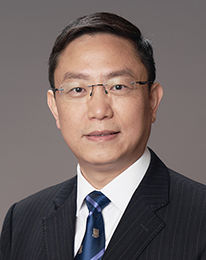
Head’s Message
PROFESSOR W. PAN
Since the establishment of The University of Hong Kong and the Faculty of Engineering in 1912, the Department of Civil Engineering has nurtured many brilliant leaders in the civil engineering discipline and made significant contributions to the local and overseas community. To address future challenges, the Department is always looking ahead to enhance its goals in education, research and knowledge exchange in order to keep abreast of the ever-changing demands of society. The current development of the Department synchronizes well with the needs of creating the next generation of industrial and scholarly leaders in civil engineering. This has been evident in the faculty qualifications and strategic expertise, world-leading research breakthroughs, pioneering role in interdisciplinary education, solid industrial collaboration with an innovative nature, strong outreach momentum contributing to community engagement, and high recognition reflected by the ranking outcome.
Today, the Department has 30 academic staff, around 400 undergraduate and 600 postgraduate students. The Department provides versatile programmes including the Bachelor of Engineering degree in Civil Engineering; Master of Science in Engineering (Civil Engineering); Master of Science in Engineering (Infrastructure Engineering and Management); Master of Philosophy (MPhil) and Doctor of Philosophy (PhD).
The innovative 4-year undergraduate curriculum is designed to equip students with knowledge beyond the traditional civil engineering subjects. Recently, we have introduced a new course on “Artificial intelligence in civil engineering”, which has been well received. Building Information Modelling (BIM) is a tool that is increasingly being used in all building projects in Hong Kong. We have also introduced an elective course on “BIM management for civil engineering”, giving our students the opportunity to learn more in depth knowledge. Other than these hot topics, we also offer the double degree in Business; the minor programme in Urban Infrastructure Informatics and three focuses on Environmental Engineering; Smart Transportation and Logistics; and Urban Informatics.
Our Department has two strategic research focuses:
(a) Modular Integrated Construction (MiC) and Digital Technology and
(b) Sustainable and Smart Infrastructure.
The accelerated urbanization and rapid economic growth have witnessed an increasing demand for resources, ranging from housing, clean water, energy to various infrastructure systems. Climate change and infrastructure systems are closely tied together and minimizing the greenhouse gases footprint of these systems is key to mitigating climate change.
Civil infrastructure systems are a backbone of society, and they are also major users of energy that needs to be reduced for a more sustainable development. Infrastructure systems are also vulnerable to climate change such as increasing frequency and intensity of extreme conditions. How to make infrastructure systems more sustainable and resilient to extreme conditions caused by climate change (e.g. typhoons, storms, earthquakes, elevated temperatures, floods, and landslides) is essential to the safety and welfare of our society, especially because Hong Kong is in a coastal area and prone to typhoons. Addressing these challenges calls for innovative approaches, such as MiC, BIM and digital building engineering, and green technology.
Our research integrates the key areas including climate change, carbon neutrality, MiC, sustainable infrastructure, and digital building engineering, water and environmental engineering. It also encompasses all components of civil engineering: from a fundamental understanding, through assessment of impacts, to the development of improved or new technologies and solutions.
The Department has continuously attracted top students and earned a good reputation in both academia and industry. We ranked the 13th globally under the QS University Subject Ranking 2025 in the subject area of Civil and Structural Engineering. With the continued growth in the local construction industry, there is a great demand for civil engineers and many opportunities for young and enthusiastic civil engineers to participate in the infrastructure developments in Mainland China and overseas. The Department of Civil Engineering will continue to devote itself in improving our teaching, research, knowledge exchange and community service for the betterment of our society.